Posts

Showing posts with the label Review boards

Inability to get out of your own way (Part 2)
Image
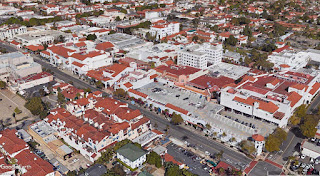
Continued from part 1 . More design inanities now from DRB Stuck with the Santa Barbara direction, we were going to make lemonade out of lemons. We decided to make some great Santa Barbara architecture, absurd as it was, and sprinkle in modern style architecture as well. No dice. We went into the design review board and were promptly shut down. The board liked the architecture independent of each other but thought the juxtaposition between them was too jarring, fixating on the gable roofs versus the flat roofs. It was a fair point. We wanted to say that we were forced into this position from the irrationality of the city and we were just trying to get  something  in there that we thought would be in the best interest of the public, but of course, that would just lead to more tension. We instead argued that the roof forms are not so much a focal point in four story architecture as they are in one to two story architecture and that as long as the vocabulary of the design i...

2D vs 3D

Image
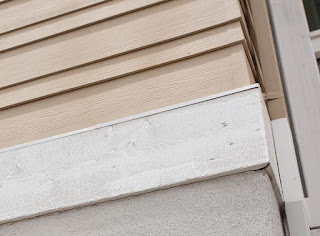
Everyone knows the difference between 2D and 3D. When watching The Simpsons, people can tell when they're seeing 2D Homer vs 3D Homer . Most people can also figure out 2D. People can pull up a map and reasonably figure out where they are in relation to nearby towns and geographic features. Likewise, most people can draw simple maps for others to follow. But when 3D enters the picture, for some reason, some people, even those that have power to deny building projects based on architectural drawings, have difficulty visualizing and presenting unbuilt space in three dimensions. In 3D perspectives, heights drop off with distance. Intuitively, we know this. When we see a building with a flat roof run into the distance, the roof line runs down as if shrinking, even though we know from experience that the roof line is flat. If captured on paper, the lines run down toward what's called "vanishing points" on the horizon. In architecture, we frequently draw building elevati...

Appealing to nature

Image
We've all heard it. We've probably all bought into it at least several times as well. Natural is good. Buy the all natural product. Naturally grown food is better. Don't clean with that, there are chemicals in it! Of course, some of those ideas may be right sometimes, but using that reason in itself is fallacious. The mentality is so pervasive there is a logical fallacy specifically termed appeal to nature . This fallacy also occasionally bleeds into building construction, primarily choosing planning commissions and design review boards as its preferred medium. I have, myself, fallen prey to this mentality when I was younger, just out of architecture school. I was really into architecture conveying the truth. I still believe in this as far as ideas like spatial transparency where using hierarchical methodologies, one can, from the exterior, tell what spaces within a building are served for which purposes. But where nature is concerned, I was aghast to learn that, at least...

Getting more expensive by trying to be more affordable

Image
Conventional wisdom says that less square footage in a house means a more affordable house. Building a 2,000 square foot house should sell for more than an 1,800 square foot house on the same lot. This convention is not necessarily true, but it doesn't stop planning commission members from utilizing this logic to force smaller square footage homes in effort to bring prices down. Not all square feet are created equal. For example, one square foot of house on a main level is substantially more valuable than one square foot of house on a basement level. Basements, even with window wells, are dark and cold spaces that tend to not be as pleasant to be in compared to above ground living which has much more opportunity for light. Two story houses achieve higher density, therefore can achieve lower costs per square foot compared to a single family home. Land in the Bay Area is expensive. A house that takes up more land will cost more for the house you get. At a planning commission ...